Introduction
Elevators are essential in residential apartments, commercial buildings, hospitals, and shopping complexes across Delhi. While most building owners focus on installation and maintenance costs, electricity consumption is another major expense that affects operating budgets.
Understanding elevator electricity costs can help property managers estimate expenses, improve energy efficiency, and reduce long-term operating costs.
How Much Electricity Does an Elevator Consume?
The power consumption of an elevator depends on several factors, including building height, passenger traffic, motor capacity, and operating hours.
Most passenger elevators in Delhi use motors ranging from 5 HP to 15 HP. A standard residential elevator generally consumes between 25,000 and 50,000 units (kWh) of electricity annually.
Average Elevator Electricity Cost in Delhi
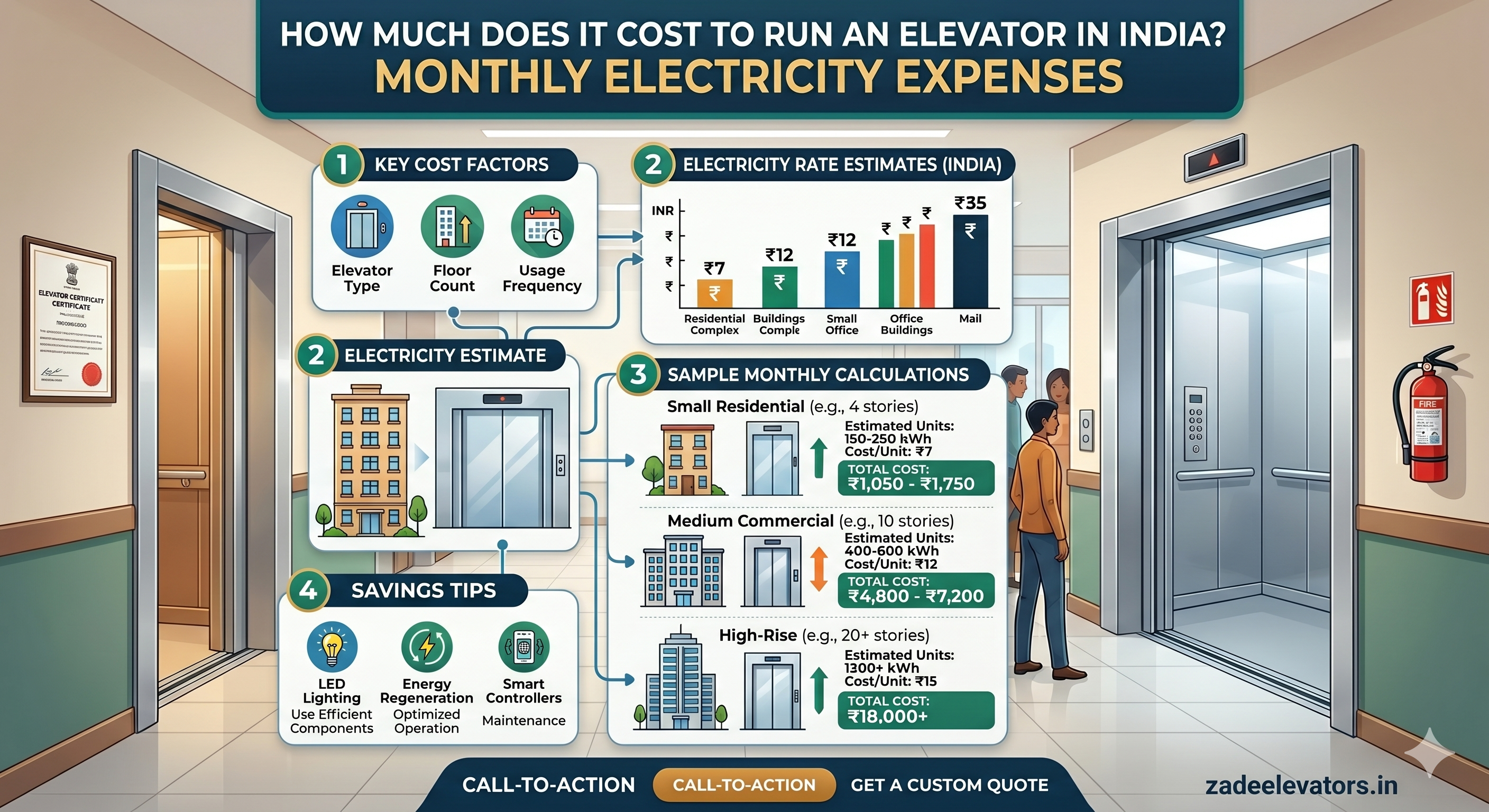
Commercial electricity rates in Delhi typically range from ₹7 to ₹9 per unit. Based on these rates, the monthly electricity cost of elevators can vary significantly.
Typical Monthly Elevator Electricity Costs
- Small residential building (8 floors, 2 elevators): ₹35,000–₹42,000 per month
- Medium residential building (12 floors, 2 elevators): ₹46,000–₹56,000 per month
- Commercial office building (20 floors, 4 elevators): ₹1.4–₹1.8 lakh per month
Example: 12-Storey Residential Building in Delhi
Consider a residential building with:
- 12 floors
- 2 passenger elevators
- Annual electricity consumption of 35,000 units per elevator
- Electricity rate of ₹8 per unit
Calculation
- Total annual consumption: 35,000 × 2 = 70,000 units
- Annual electricity cost: 70,000 × ₹8 = ₹5,60,000
- Monthly electricity cost: ₹5,60,000 ÷ 12 = ₹46,667
This means a typical 12-storey residential building in Delhi may spend approximately ₹46,000–₹50,000 per month on elevator electricity.
Factors Affecting Elevator Electricity Bills
1. Building Height
Taller buildings require elevators to travel greater distances, increasing energy consumption.
2. Passenger Traffic
Buildings with high daily usage consume more electricity due to frequent elevator movement.
3. Number of Elevators
More elevators increase overall electricity consumption and monthly expenses.
4. Elevator Age
Older elevators are generally less energy-efficient and consume more power.
5. Motor Technology
Modern VFD (Variable Frequency Drive) elevators can reduce electricity consumption by up to 40% compared to conventional systems.
How to Reduce Elevator Electricity Costs
- Install VFD Technology: VFD systems optimize motor speed and can significantly lower electricity consumption.
- Upgrade to LED Cabin Lighting: LED lights consume less power and last longer than traditional lighting systems.
- Perform Regular Maintenance: Proper lubrication, alignment, and inspection improve efficiency and reduce energy waste.
- Use Regenerative Drives: Modern regenerative systems convert braking energy into usable electricity, reducing net power consumption.
Why Energy-Efficient Elevators Matter
Energy-efficient elevators not only reduce monthly electricity bills but also lower building operating costs and support sustainable building practices. Many modern elevator systems can reduce energy consumption by 25% to 40% compared to older models.
Conclusion
Elevator electricity costs are a significant part of building operating expenses in Delhi. A typical 12-floor residential building with two elevators can spend around ₹46,000 to ₹50,000 per month on electricity alone.
By investing in energy-efficient technologies such as VFD drives, LED lighting, and regular maintenance, building owners can substantially reduce electricity bills and improve overall elevator performance.
Want to Calculate Your Elevator Electricity Bill?
Use our free online Elevator Power Cost Calculator to estimate your monthly and annual electricity bill in under 30 seconds.
Calculate Elevator Electricity Bill NowIf you are planning a new elevator installation or looking to reduce operating costs, consulting an experienced elevator company can help identify the most cost-effective solutions for your building.